
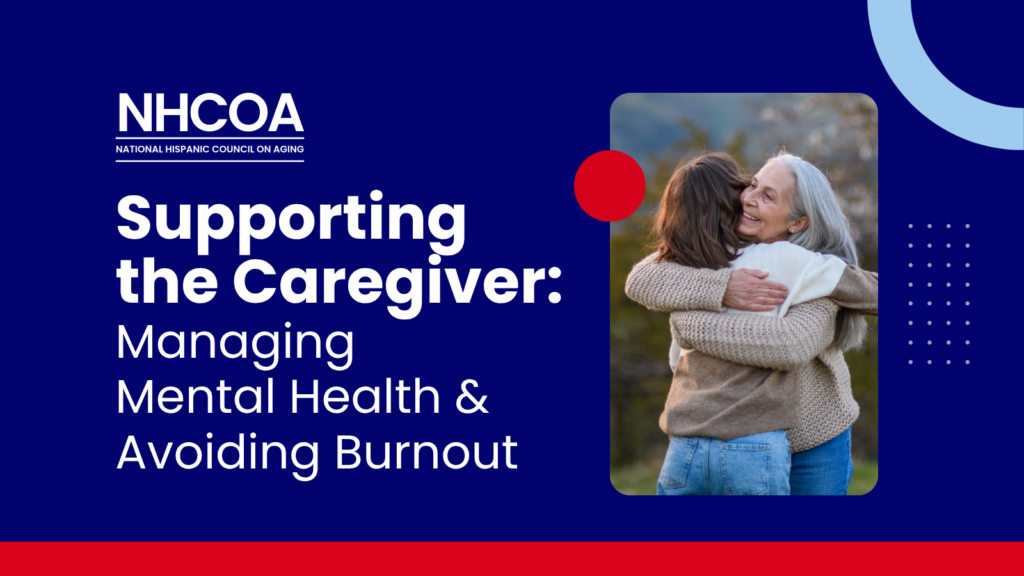
Caregivers are often the quiet backbone of our families and communities. They show up every day, carrying the immense responsibility of caring for someone they love. Whether it is helping with daily routines, managing medications, or simply offering companionship, caregiving is an act of deep compassion and commitment.
Yet, in the midst of caring for others, caregivers are often the ones whose health is overlooked, and whose stress goes unseen.
The reality is that caregiving is not just a role—it is a lifestyle that can demand constant attention. At the National Hispanic Council on Aging, we know that caregivers are often the foundation for another person’s ability to live and age in comfort, but this responsibility can come with a significant emotional toll. The nature of caregiving requires ongoing vigilance, adaptability, and emotional resilience, often leaving little room for rest, personal reflection, and moments of joy.
For Hispanic caregivers in particular, the responsibility can be even more intensive. A research study conducted by the National Alliance for Caregiving and Evercare in 2008 found that Hispanic caregivers are more likely to experience high-burden situations, with 63% reporting significant caregiving demands. They spend more hours per week providing care—an average of 37 hours—and assist with a greater number of daily living activities than their non-Hispanic counterparts. These caregivers are often younger, frequently balancing work, family, and caregiving simultaneously, all while deeply rooted cultural values emphasize family responsibility and unity.
This unwavering commitment to family makes it harder for caregivers to step back and prioritize their own well-being. Many feel a profound sense of duty, often placing their loved one’s needs above their own without hesitation. While this devotion is admirable, it can quietly lead to emotional exhaustion.
The toll upon caregivers’ health is multifaceted. It can show up as physical fatigue, emotional strain, financial stress, and social isolation. Over time, these pressures can build, increasing the risk of anxiety, depression, and burnout. Studies suggest that a significant portion of caregivers experience depressive symptoms, underscoring just how critical it is to acknowledge and address their mental health needs.
Mental health matters not only for the caregiver, but for the quality of care they are able to provide. When caregivers are supported, rested, and emotionally well, they are better equipped to show up fully for their loved ones. Prioritizing mental health is not a sign of weakness; it is an act of strength and sustainability.
Simple steps can make a meaningful difference. Speaking openly about your feelings, seeking support from others, and allowing yourself moments of rest are all essential. Engaging in hobbies, maintaining physical health, and connecting with support groups can help caregivers feel less alone and more grounded. Even small moments of self-care can restore energy and perspective.
It is also important for families and communities to recognize the weight caregivers carry. Offering help, listening without judgment, and acknowledging their efforts can go a long way. Caregiving should never be a journey taken in isolation.
NHCOA knows well the complexity of being a family caregiver, and we aim to help lessen the burden it places on caregivers’ mental health. Come learn about how to stop burnout, manage your stress, and ensure your good mental health in our upcoming Caregiving Training, “Caring for the Caregiver.” Available in both in-person and virtual formats, this training program will be offered over the summer of 2026. For more information on this training program, reach out to our team via email at nhcoa@nhcoa.org, or call us at 202-347-9733.
For more information and assistance in finding mental health resources, the National Hispanic Council on Aging (NHCOA) Resource Center is also available by phone call or WhatsApp at (202) 658 – 8664. The NHCOA Resource Center is a multilingual hub that educates and empowers community members and constituents with accurate information and helpful resources.
Reference:
National Alliance for Caregiving and Evercare. Evercare Study of Hispanic Family Caregiving in the United States: Findings from a National Study. Washington, DC: National Alliance for Caregiving and Evercare, November 2008.
Recent Comments