
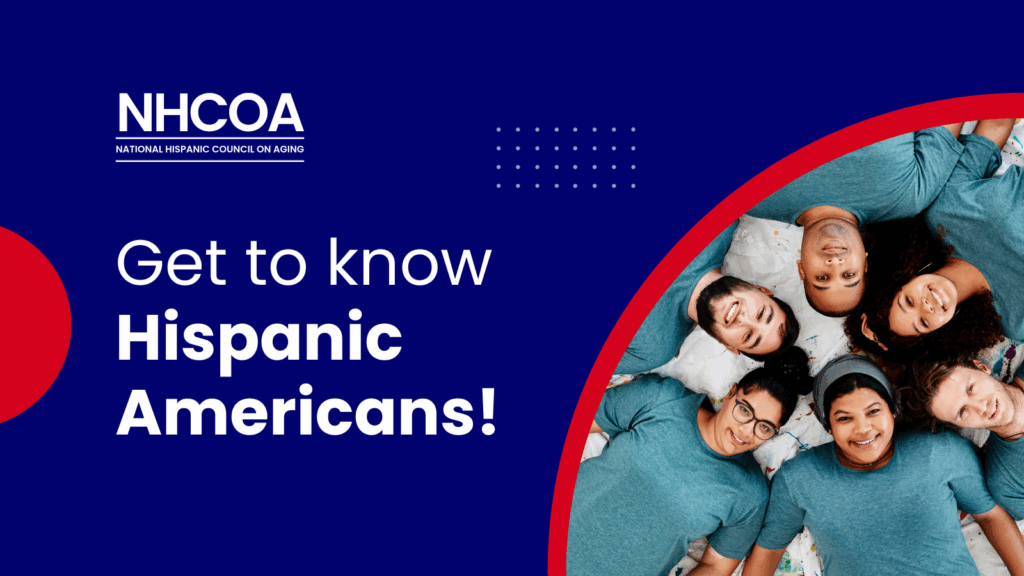
The United States is a massive country, with just as massive of a population of over 340 million. Did you know that Hispanic Americans make up over 65 million of that total? That’s about one fifth of the country that identifies as Hispanic American, but make no mistake, that large slice of the pie is anything but homogenous.
There are over 20 nationalities that are identified as Hispanic, each with their own distinct culture. In the United States, the Hispanic American population is predominantly composed of heritages from Mexico, Puerto Rico, El Salvador, Cuba, and the Dominican Republic.
Mexican Americans
There are almost 38 million Mexican Americans, about 58% of the total 65 million Hispanic Americans within the United States.
Hispanic Americans with a Mexican heritage are member to a culture that has collected a variety of influences over the past several centuries. Since its Spanish colonization, Mexican culture has been a combined product of surviving indigenous cultures and European influences.
Among the United States Mexican population, notable figures include Cesar Chavez, who co-founded the National Farm Workers Association, Ellen Ochoa, the first Hispanic American woman astronaut and director of the LBJ Houston Space Center, Salma Hayek, the first Hispanic American woman to be nominated for Best Actress at the Oscars, and many more.
Puerto Rican Americans
The second largest Hispanic American ethnic group, it is estimated that there are almost 6 million Puerto Rican Americans, about 9% of the Hispanic American population.
Puerto Rico itself, is currently a United States territory, but has been home to an indigenous people known as the Taínos long before it was colonized by Spain. Due to its location in the edge of the Caribbean Sea, Puerto Rico was visited by many different peoples. It is now home to a fusion of cultures from its indigenous peoples, as well as from Spanish and African influences.
Puerto Rican culture has provided some of the brightest stars in the American cultural landscape. We know such figures as Roberto Clemente for his historical impact on the diversity of American athletics, but especially today, Puerto Rican Americans are center stage: Bad Bunny is among the biggest names in music today, and Lin-Manuel Miranda is among the most prominent figures in American theater—the list is endless. At the highest level of the judicial branch, the Supreme Court, Sonia Sotomayor is the first Hispanic American woman to take on the position.
Salvadoran Americans
In the United States, there is an estimated 2.6 million Hispanic Americans of Salvadoran heritage, about 4% of the entire Hispanic American population.
El Salvador is actually the smallest nation in Central America by size, but it also manages to be the most densely populated in its region. Its culture holds influences from such indigenous peoples as the mayans and pipils, and from its colonization under Spanish rule.
A true hero amongst Salvadoran history, Jose Arturo Castellanos Contreras was a Salvadoran army colonel, who managed to save up to 40,000 Jewish Central Europeans from Nazi persecution in World War II. As for those who found themselves in the United States, there are many other prolific personalities with Salvadoran heritage. A pioneer in the field of biology, George Melendez Wright was the first to conduct a scientific survey of plant life for the United States National Park Service.
Cuban Americans
There’s an estimated Cuban population of 2.5 million in the United States, about 4% of the Hispanic American population, who predominantly live in the state of Florida.
Cuba was also colonized by the Spanish, and endured dramatic shifts in its political climate from the time of its colonization to the Cold War. For decades, the Cuban Adjustment Act of 1966 allowed for a quick a immigration process for those who left Cuba, leading to the dense population that we still see in Florida today. Cuban culture contains both Spanish and African influences, in addition to indigenous Taíno influence.
Born in Cuba, Ileana Ros-Lehtinen was the first Hispanic American woman elected to Congress, as a Florida representative. Today, there are actually four members of Congress, representing Florida, that are of Cuban descent, Mario Díaz-Balart, Maxwell Alejandro Frost, Carlos Giménez, and María Elvira Salazar, speaking to the profound influence Cuban culture has on the state.
Dominican Americans
There are almost 2.5 million Dominican Americans living in the United States, just under 4% of the total Hispanic American population.
The Dominican Republic is another island nation located in the Caribbean Sea, close to Puerto Rico, and sharing a border with Haiti. Originally home to the indigenous Taíno, Hispaniola, the land now called the Dominican Republic, was another example of Spanish colonization. Following repetitive claims to the land by the Spanish, French, and later on, Americans in the 20th century, Dominican culture has European and African influences, along with its original Taíno elements.
Among the many noteworthy Dominican figures, Oscar de la Renta is a profound trailblazer in the world of fashion, Zoe Saldana is the first Dominican-American actor to win an Oscar, and Alex Rodriquez is often viewed as one of the best modern base-ball players, with three MVP awards and a World Series under his belt.
Beyond these five major Hispanic American populations in the United State, there are over 15 million Hispanic American people with widely varying heritages from countries all over Central and South America.
Within the Hispanic American community, there is certainly commonality, familiarity, and understanding, but aside from these similarities, Hispanic Americans carry the stories and traditions of many different countries and histories. And it is precisely this eclectic collection of cultures and communities that composes a fifth of the United States.
Do you want to learn more about Hispanic Americans, how to work with this wonderful community, and how to support the community programs that allow them to prosper? Consider reaching out to the National Hispanic Council on Aging Resource Center, by phone call or Whatsapp at (202) 658 – 8664. The NHCOA resource center is a multilingual hub that educates and empowers community members and constituents with accurate information and helpful resources.
This publication is supported by the Administration for Community Living (ACL), U.S. Department of Health and Human Services (HHS) as part of a financial assistance award totaling $210,023 with 67 percentage funded by ACL/HHS and $70,240 amount and 33 percentage funded by non-government source (s). The contents are those of the author (s) and do not necessarily represent the official views of, nor an endorsement, by ACL/HHS, or the U.S. Government.
References:
- “Detailed Racs and Ethnicities in the United States and Puerto Rico: 2020 Census,” Census Interactive Gallery. United States Census Bureau. 09/21/2023. https://www.census.gov/library/visualizations/interactive/detailed-race-ethnicities-2020-census.html
Recent Comments