
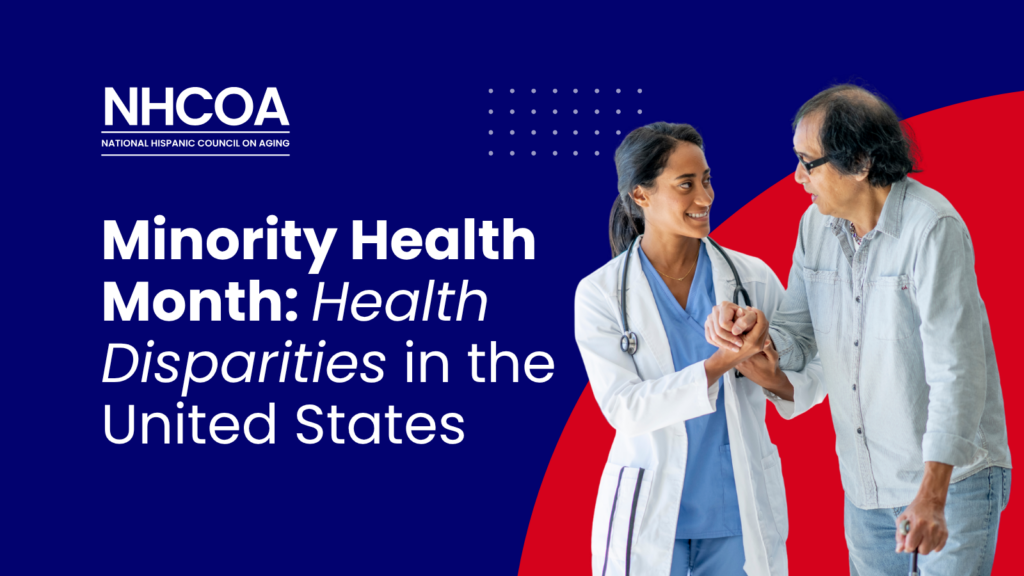
This April is Minority Health Month, and NHCOA wants you to know why that is. You might have heard the term “disparity” or “disproportionate impact,” especially if you follow NHCOA media, or find yourself in our community spaces. Disparities in public health, and in the United States health care system, are key issues that have driven our work for over fifty years—it reflects a complicated, and overwhelming level of overlapping issues that result in communities, like the Latino community, being largely underserved.
Health disparities in the United States are persistent, complex, and deeply rooted in the way society is structured. Despite medical advancements and increased awareness, minority populations continue to experience worse health outcomes across a wide range of conditions. At NHCOA, we believe that our community members can be their best advocates. Understanding why these disparities occur is key to addressing them.
What Are Health Disparities?
Health disparities are preventable differences in health outcomes and access to care experienced by certain groups. These differences are not random—they stem from broader social, economic, and environmental disadvantages.
For many racial and ethnic minority populations, these disparities show up as higher rates of chronic diseases like diabetes, cancer, cardiovascular disease, and obesity. These health disparities also mean lower life expectancy and reduced access to quality healthcare. These gaps are not simply the result of individual choices—they are driven by systemic factors.
A given household within an underserved community faces a variety of overlapping circumstances that will result in worsened health outcomes for most chronic diseases. Such disproportionate circumstances as reduced income and employment opportunities, worse housing conditions, and limited access to nutritious foods due to food deserts all compound to make it extremely difficult for any household to meet the recommendations by health experts and healthcare providers.
Systemic and Structural Issues
In addition to food deserts (areas where there are too few or even no grocery stores), which lead to food insecurity and thereby impact health outcomes, there are many systemic issues that result in worse healthcare experiences and a general lack of access to proper healthcare.
Minority communities are likely to experience:
- Fewer healthcare facilities
- Higher pollution levels
- Limited economic opportunities
Socioeconomic circumstances also remain highly pervasive issues, creating many obstacles between underserved communities and good healthcare experiences. Research shows that minority populations are more likely to:
- Be uninsured or underinsured
- Face barriers to preventive services like screenings
- Receive lower-quality care due to cultural and/or linguistic incompetence
These gaps contribute to later diagnoses, more advanced disease, and higher mortality rates.
These issues can be addressed on a policy level, and organizations like the National Hispanic Council on Aging exist to help make sure that the changes our communities need are reflected in new policies.
Such areas of policy include:
- Expanding Insurance Coverage for beneficiaries as well as drug coverage.
- Reducing Health Care Costs
- Bolstering social safety nets like Medicare, Medicaid, and SNAP
- Improving cultural and linguistic competence in healthcare facilities
Improving minority health outcomes requires more than expanding healthcare access—it requires addressing this intersectional net of systemic issues. On an individual level, the first step you can take is to ensure that you are knowledgeable about these issues, such that you can better advocate for yourself, your family, and your community. Stay connected with NHCOA, other community-minded organizations for important news on policies that impact Latino communities, and other underserved communities of color.
The National Hispanic Council on Aging is committed to fighting and uprooting these health disparities through its services, outreach, advocacy, and more. For more information and assistance in finding support and resources, the National Hispanic Council on Aging (NHCOA) Resource Center is available by phone call of WhatsApp, at (202) 658 – 8664. The NHCOA Resource Center is a multilingual hub that educates and empowers community members and constituents with accurate information and helpful resources.
You can also stay up to date on NHCOA events and activity by using @NHCOA on Facebook, X, and Instagram, or by checking out our website, nhcoa.org!
Recent Comments