
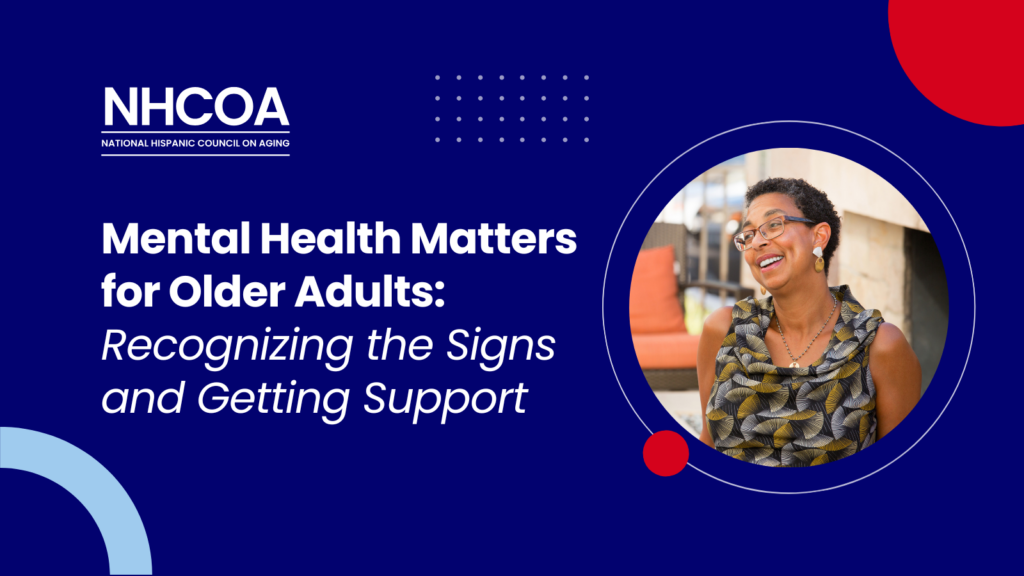
Aging brings many changes—new routines, different roles, shifting relationships, health concerns, and sometimes a sense of loss. These experiences can affect both the body and the mind. Just as we pay attention to our physical health, like managing chronic illness or engaging in regular exercise, it’s important to pay attention to our mental, social/emotional health as well.
Mental health challenges are common among older adults—and yet too often they go unrecognized, unspoken, and untreated. A common myth that many believe is that sadness, anxiety, or greater social isolation are each simply “a part of getting older,” and not something that can be avoided. What’s true is that these circumstances are common in the aging process, that is why, it is critical for all of us to manage our mental health. It can absolutely be addressed, and does require a similar amount of awareness and care that we might give to our physical health.
It’s easy to underestimate the benefits of small efforts to improve our mental health, but it’s those consistent moments of engagement and connection with others that have a lasting impact on our happiness, and our energy. But it doesn’t just come down to older adults. Family, friends, caregivers, and community members should take it upon themselves to be familiar with the signs of poor mental health in their loved ones.
Common Warning Signs to Watch For
- Persistent sadness, tearfulness, or hopelessness
- Loss of interest in favorite activities
- Changes in sleep or appetite
- Trouble concentrating or remembering
- Increased irritability or agitation
- Avoiding social gatherings
- Frequent complaints of aches and pains
- Expressions of feeling like a burden
The National Hispanic Council on Aging also knows first-hand that just as there is a myth of these mental health concerns being part of aging, there is also a cultural barrier of stigma within the Latino community. Many Latinos are ashamed to accept a mental health diagnosis for fear of being judged by others. When it comes to mental health care, such cultural factors can serve to increase stigma and obscure the validity of mental health care from Latino communities, out of a desire to not air private family matters with mental health professionals. Still, even after overcoming such stigma to seek mental health care, overcoming systemic barriers such as lack of linguistically or culturally appropriate care, can be difficult.
Tips for finding linguistically and culturally appropriate mental health care providers:
- Start with your primary health care provider. While they may not be trained in counseling, primary care doctors can provide assessments and referrals to mental health professionals.
- Try the National Treatment Referral Helpline: 800-662-4357. This helpline is equipped with knowledge and understanding to help you address financial barriers, and other constraints, such that you can find a provider that meets your needs. They will also have the capability to connect with your providers that have language-access services.
If you’re interested in further information to help destigmatize mental health care for your community members, or a loved one whom you’re concerned about, check out the National Alliance on Mental Illness’s (NAMI) “Compartiendo Esperanza: Mental Wellness in Hispanic/Latin American Community” program: https://www.nami.org/programs/nami-compartiendo-esperanza-mental-wellness-in-hispanic-latin-american-community/
In moments of crisis, be sure that you are familiar with the 988 Suicide & Crisis Lifeline. By calling or texting 988, you will be connected with professionals trained in suicide and crisis support. The 988 Suicide & Crisis Lifeline is staffed with Spanish-speaking operators, and ready to help.
For more information and assistance in finding mental health resources, the National Hispanic Council on Aging (NHCOA) Resource Center is also available by phone call of WhatsApp, at (202) 658 – 8664.The NHCOA Resource Center is a multilingual hub that educates and empowers community members and constituents with accurate information and helpful resources.
This publication is supported by the Administration for Community Living (ACL), U.S. Department of Health and Human Services (HHS) as part of a financial assistance award totaling $210,023 with 67 percentage funded by ACL/HHS and $70,240 amount and 33 percentage funded by non-government source (s). The contents are those of the author (s) and do not necessarily represent the official views of, nor an endorsement, by ACL/HHS, or the U.S. Government.
Recent Comments